


Updated on: March 9, 2026
Learning how to use a hair dryer properly can transform your daily styling routine and give you salon-quality results at home. Whether you're new to blow-drying or looking to refine your technique, this guide covers everything from heat settings to styling attachments. You'll discover insider tips that reduce frizz, protect your hair health, and help you achieve the look you want in less time. Master the fundamentals and watch your confidence—and your hair—shine.
Table of Contents
- Understanding Your Hair Dryer Basics
- Setting Up for Success
- Step-by-Step Blow-Drying Technique
- Working with Attachments and Nozzles
- Common Questions Answered
Understanding Your Hair Dryer Basics
Before you plug in your device, it's worth taking a moment to understand what you're working with. A hair dryer works by forcing heated air through your hair strands, evaporating moisture and setting your style. Most models come with multiple heat and speed settings, and understanding these controls is your first step toward better results.
Heat settings typically range from low to high. Low heat is gentler and works best for delicate, fine, or damaged hair. Medium heat suits most hair types and is ideal for everyday styling. High heat dries faster but can cause damage if used too frequently or incorrectly. Speed settings affect how quickly air flows through your hair—higher speeds mean more air velocity, which is great for drying but can cause frizz if you're not careful.
Modern hair dryer technology has come a long way. Many advanced models now feature ionic technology, which releases negative ions that reduce frizz and add shine. Some include infrared heat, which dries hair more gently from the inside out. These innovations can make a real difference in your hair's health and appearance over time.
Setting Up for Success
Preparation matters more than most people realize. Start by towel-drying your hair thoroughly before you begin blow-drying. You shouldn't start with soaking wet hair—that's counterproductive and forces your device to work harder. Instead, gently squeeze out excess water with a soft towel or microfiber cloth. Your hair should feel damp, not dripping.
Next, apply a heat protection product. This is non-negotiable if you care about your hair's long-term health. Heat protectants create a barrier between your hair and the heat source, reducing damage and frizz. Spray it evenly throughout damp hair before you start drying. Some products also add shine and smoothness, so you're getting multiple benefits from one step.
Detangle your hair with a wide-tooth comb while it's still wet. Wet hair is more elastic and less prone to breakage, making this the ideal time to work through knots. Working through a tangled section with your dryer will only damage your hair and make styling take longer. Take two minutes to detangle properly—it's time well spent.
Preparation steps: towel-drying, applying heat protectant spray, and combing through damp hair gently.
Step-by-Step Blow-Drying Technique
Step One: Choose Your Settings
Start with medium heat and medium speed for most hair types. If you have fine or damaged hair, go with low to medium heat. You can always increase heat if needed, but you can't undo heat damage. The goal is to dry your hair effectively without compromising its integrity.
Step Two: Divide Your Hair Into Sections
Don't try to dry your entire head at once. Divide your hair into four to six sections using clips. Start with the bottom layers and work your way up. This technique, called section drying, ensures every strand gets proper attention and helps you achieve a more polished finish.
Step Three: Direct the Airflow Downward
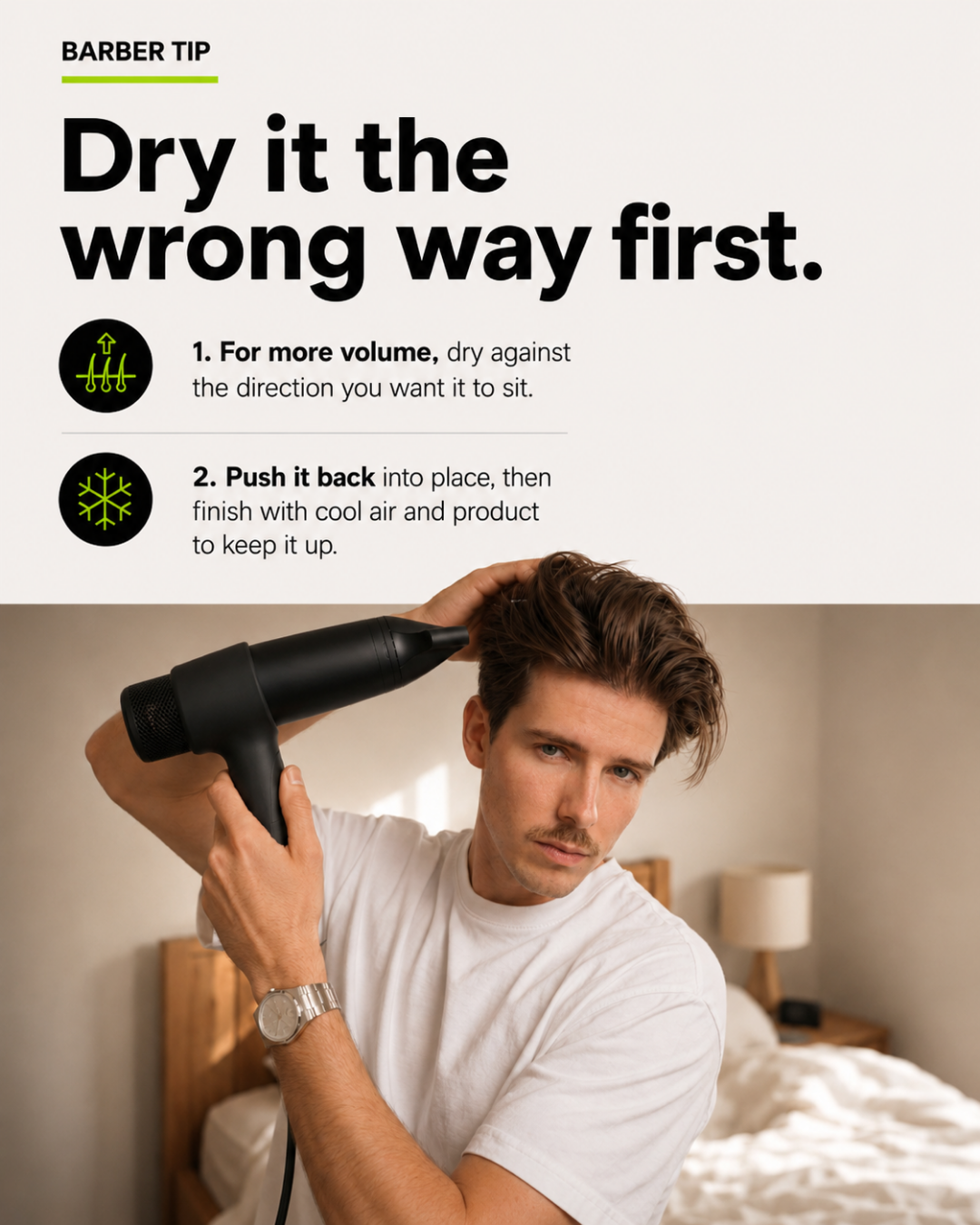
Always direct hot air down the hair shaft, never up. Pointing the dryer upward opens your hair cuticles, causing frizz and making your hair look dull. Directing air downward seals the cuticle, locks in moisture, and creates shine. This single change can dramatically improve your results.
Step Four: Use a Concentrator Nozzle
Concentrator attachments focus airflow into a narrower stream, giving you more control and reducing frizz. Hold the nozzle about six inches from your hair. Move it slowly through each section, using your other hand to guide hair into the desired shape. This takes a bit more time than free-hand drying, but the results are worth it.
Step Five: Finish with Cool Air
Once your hair is nearly dry, switch to cool air for the final pass. This seals the cuticle layer completely, boosts shine, and sets your style. Cool air feels refreshing too, so it's a nice way to end your routine. Spend thirty seconds to one minute on this step—it makes a noticeable difference.
Working with Attachments and Nozzles
Most dryers come with a standard concentrator nozzle, but many models offer additional attachments that expand your styling options. Understanding what each tool does helps you choose the right one for your desired look.
A diffuser attachment is your best friend if you have curly or coily hair. It disperses air more broadly and gently, helping you define curls without disrupting their natural pattern. Place the diffuser close to your curls and use a scrunching motion, moving it slowly upward. This technique enhances curl definition while reducing frizz.
Some specialized models designed for curly hair include engineered nozzles that work with your curl pattern rather than against it. If you have texture, investing in the right tool makes styling faster and easier.
For straight or wavy hair, the standard concentrator nozzle paired with a paddle brush or round brush gives professional-looking results. The brush adds tension that helps create smoothness and shape. Experiment with different brush sizes—larger brushes create volume, while smaller ones work great for detail work and shorter sections.
Hair dryer attachments: concentrator nozzle, diffuser for curls, and various brush styles for different textures.
Pro Tips for Better Results
Keep your dryer moving. Staying in one spot too long can cause damage and create uneven drying. Use smooth, continuous motions as you work through each section. If you notice a section drying faster than others, spend more time on the slower-drying areas.
Watch your distance. Holding your dryer too close generates intense heat that damages hair. Six to eight inches is the sweet spot—close enough for control but far enough for safety. This distance also prevents you from burning your scalp or ears.
Don't overdo it. Once your hair is dry, stop. Continuing to blow-dry already-dry hair serves no purpose except to damage it further. You'll know when you're done—your hair will feel smooth and look shiny.
Common Questions Answered
How Long Should It Take to Dry My Hair?
Drying time depends on your hair length, thickness, and the power of your device. Fine, short hair might take five to ten minutes. Thick, long hair could take fifteen to twenty minutes. If it's taking much longer, you might have your heat too low, your speed too low, or you might be holding the dryer too far away. Adjust one variable at a time to find your optimal settings.
Why Is My Hair Still Frizzy After Blow-Drying?
Frizz usually comes from directing air upward, skipping the cool-shot step, or not using heat protectant. It can also result from over-drying, which strips moisture from your hair. Make sure you're directing air downward, using a concentrator nozzle, applying heat protectant beforehand, and finishing with cool air. If humidity is your main issue, a frizz-control serum or oil applied to damp hair before drying helps tremendously.
Is It Bad to Blow-Dry My Hair Every Day?
Blow-drying daily is fine if you're using the right technique and products. The key is using appropriate heat levels, applying heat protectant, and not keeping your dryer in one spot. Many people find that daily blow-drying actually keeps their hair healthier because they're not rough-drying with a towel. Just listen to your hair—if it feels dry or damaged, consider using lower heat or giving yourself a break.
What's the Difference Between Ionic and Regular Hair Dryers?
Ionic dryers release negative ions that break down water molecules into smaller droplets, allowing them to penetrate the hair shaft more easily. This results in faster drying time and less frizz. Regular dryers work fine, but ionic technology is a worthwhile upgrade if you deal with frizz or want shorter drying times. Many premium styling tools now include ionic features as standard.
Should I Blow-Dry on High Heat?
Not unless your hair is very thick and you're in a hurry. High heat dries faster but increases damage risk. Medium heat achieves excellent results with less risk. Save high heat for occasional situations when you're really pressed for time. Your hair will thank you with better health and longevity.
Mastering the art of blow-drying takes practice, but the investment pays off in better-looking hair and faster mornings. Start with these fundamentals, be patient with yourself, and adjust your technique based on what you see and feel. Every hair type responds differently, so what works for your friend might need tweaking for your unique texture. Pay attention to how your hair responds, keep learning, and soon blow-drying will feel natural and effortless. Your salon-quality results are just around the corner.

Sarah Courtney writes expert hair content for Heist’s blog and guides. She focuses on practical styling advice and product insights that help you nail everyday looks with salon-level results. Her work blends technical knowledge of hair tools with clear step-by-step tips you can apply at home. You can see her byline on posts like Choosing a Salon Quality Dryer for Everyday Home Styling.




Share:
Hair Health Benefits: Naturally Boost Growth and Strength
Tips to Prevent Hair Damage and Keep Strands Strong